Coastal Timber Living on the North Sea: Designing for Wind and Tide
How modern Nordic architects balance radical climate resilience with contemplative domestic minimalism along the Arctic circle.
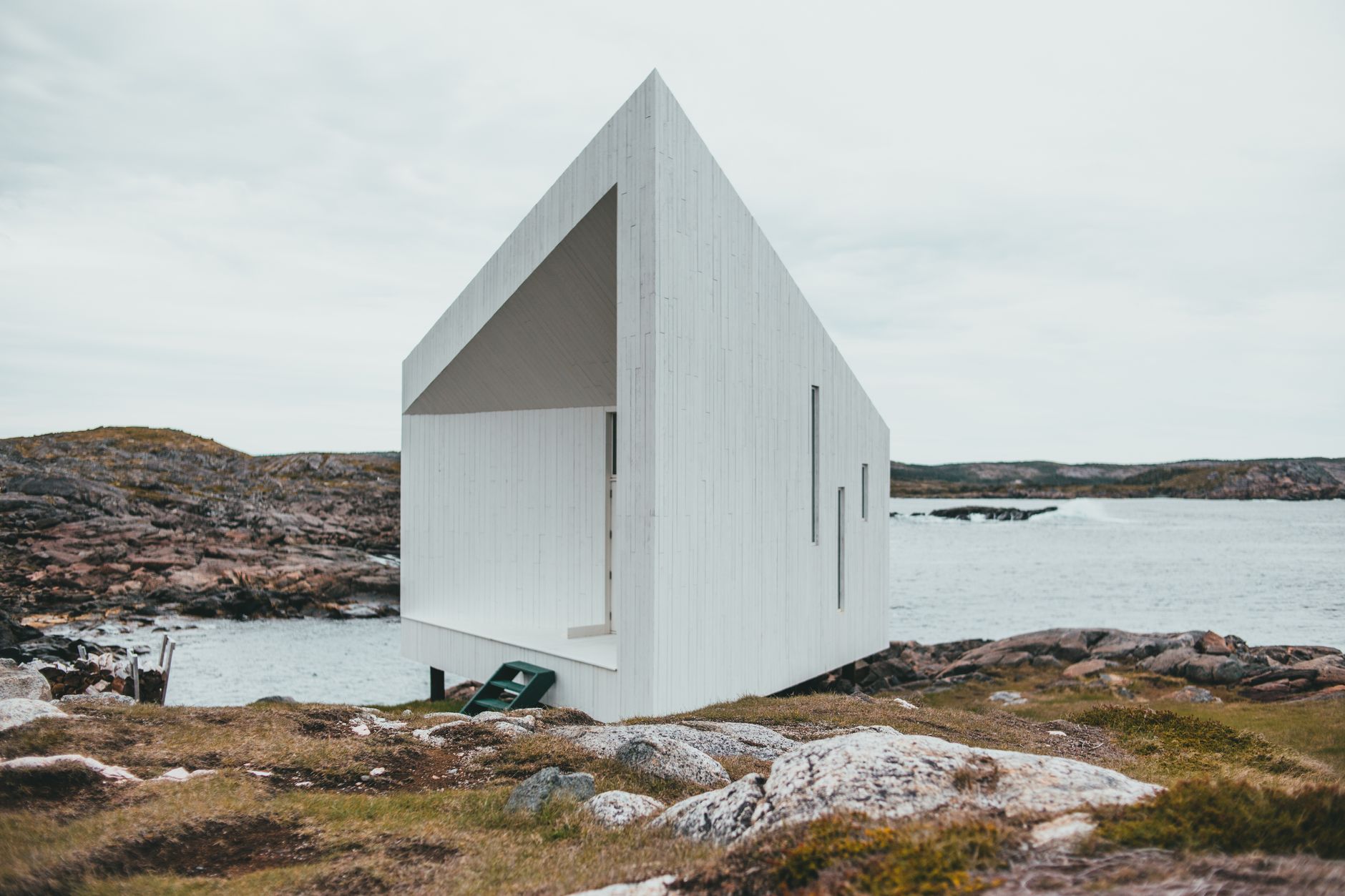
Table of Contents
Along the western archipelago of Helgeland, Norway, the Atlantic ocean collides with bare granite shoals in a relentless display of geological drama. Here, where winter winds regularly exceed gale force and summer twilight lingers uninterrupted for weeks, constructing a home requires a deep understanding of aerodynamics and material resistance.
1. The Brutal Poetry of Maritime Elements
Contemporary timber architecture along this northern coast has discarded ornamental excess in favor of aerodynamic, low-profile envelopes. Rather than attempting to conquer nature, these cabins are sculpted to deflect winter currents, channeling violent coastal gales up and over inclined cedar gables.
We stayed in an experimental artist refuge cantilevered over tidal rocks. At high tide, Arctic seawater rushes directly beneath the timber foundation stilts. Inside, the sound of crashing waves is muted by triple-glazed thermal panes and dense cellulose acoustic insulation, transforming maritime turbulence into a calming backdrop for study and creative focus.
2. Pine, Pine Tar, and Granite Anchors
Traditional Norwegian rorbuer (fishermen’s cabins) relied on locally felled Scots pine treated with mixtures of raw pine tar and charcoal. Modern architects continue this lineage while introducing advanced timber cross-lamination (CLT) technologies.
Because road access is non-existent across these isolated islands, building materials must be barged in and lifted with minimal footprint. The foundations rest directly on steel pins drilled into bedrock, avoiding extensive concrete excavation and allowing the shoreline ecosystem to flourish beneath the structure untouched.
3. The Scandinavian Sanctuary: Light and Warmth
If the exterior envelope is rugged armor, the interior is pure warmth. Exposed pale birch plywood walls, untreated soapstone hearths, and wool textiles from local sheep create an environment known locally as lun—an atmosphere of deeply sheltering warmth.
Window placement is calculated with astrophysical precision. Rather than installing continuous glass facades that would lead to significant thermal loss during polar nights, deep-set picture windows frame specific natural compositions: a distant lighthouse beacon, the snow-covered crest of a neighboring island, or the northern lights dancing across the celestial dome.
4. Lessons for Sustainable Contemporary Living
These coastal timber dwellings prove that sustainable architecture is not an aesthetic compromise; it is an enhancement of the human condition. By respecting regional ecology, minimizing physical ground impact, and sourcing honest local materials, we build spaces that protect our mental clarity as reliably as they protect us from the storm.